The Blog

Name of the blog

rss

Description of the blog

Associated Builders and Contractors has released its sixth annual construction technology report on health and safety tech and innovation, which spotlights how contractors are leveraging technology, data and collaboration to address the industry’s health and safety challenges while creating measurable improvements in workforce performance and operational excellence. ABC released the report during Careers in Construction Month to celebrate construction safety professionals’ commitment to protecting workers.

“The speed of health and safety innovation is redefining construction excellence,” said Matt Abeles, ABC vice president of construction technology and innovation. “ABC contractors expand their focus beyond traditional jobsite safety to create environments that protect the physical, mental and emotional well-being of every single worker. This report explores the technologies, strategies and best practices that help contractors reduce risk, improve workforce health and build stronger safety cultures. From wearable technologies and AI-powered risk detection to mental health initiatives, fatigue and hydration management, environmental monitoring and connected jobsite solutions, the tools and programs in this report demonstrate how the industry’s leaders are putting in the work to make total human health an essential part of every project.”

“While the construction industry continues to evolve, our commitment to protecting people remains unchanged,” said Adam Latourelle, chair of ABC’s Construction Technology and Innovation Committee and chief information officer, the BR Cos., Glendora, California. “As projects become more complex, innovative technologies are creating new opportunities to strengthen jobsite health and safety. The companies featured in this report demonstrate that technology is no longer simply a tool for improving productivity—it is becoming an essential part of modern health and safety programs. Technology alone does not create a safer workplace. Strong leadership, engaged employees and a culture that prioritizes health and safety remain the foundation of every successful organization.”

ABC’s Tech and Innovation Report: Health and Safety features case studies authored by safety and risk management leaders at ABC member contractors finding better ways to keep workers hydrated in the heat, detect patterns in incident data to eliminate injuries and establish safety standards for hand tools. Health and safety experts also described the deployment of Relationship Dynamics Ambassadors to connect employees with coaching and resources, better jobsite security monitoring, faster and safer inspections with drones and digitizing pre-task planning and hazard recognition.

The report, published by the ABC National Construction Technology and Innovation Committee, was made possible by ABC’s 2026 Tech Alliance members—Arcoro, Autodesk Inc., BuildOps, Datagrid, Document Crunch, Egnyte, Kojo, KPA, Sage, Sentriforce, Smartapp, SmartBuild, SubHQ, Stack and Trimble—and ABC strategic partner Milwaukee Tool.

ABC creates the conditions for construction companies to innovate, differentiate and attract and educate top talent to win and deliver work safely, ethically and profitably for the betterment of the communities in which they work. ABC continues to invest in helping its members select high-quality construction technology through its Tech Alliance and Tech Marketplace.

Visit abc.org/techreport to read the digital report.

ABC members received the print edition of the Tech and Innovation Report: Health and Safety with the September/October issue of Construction Executive, the magazine for the business of construction.

Ahead of Careers in Construction Month, Associated Builders and Contractors has highlighted new research showing that multiskilled construction crews can reduce completion time by about 30% and increase production by 37% to 50% on construction scopes where multiple trades must work in tight sequence. The findings come from controlled field trials detailed in the Simplar Foundation’s Improving Productivity in Multi-Trade Construction Workflows, the second report from the first-ever national multiskilling dataset.
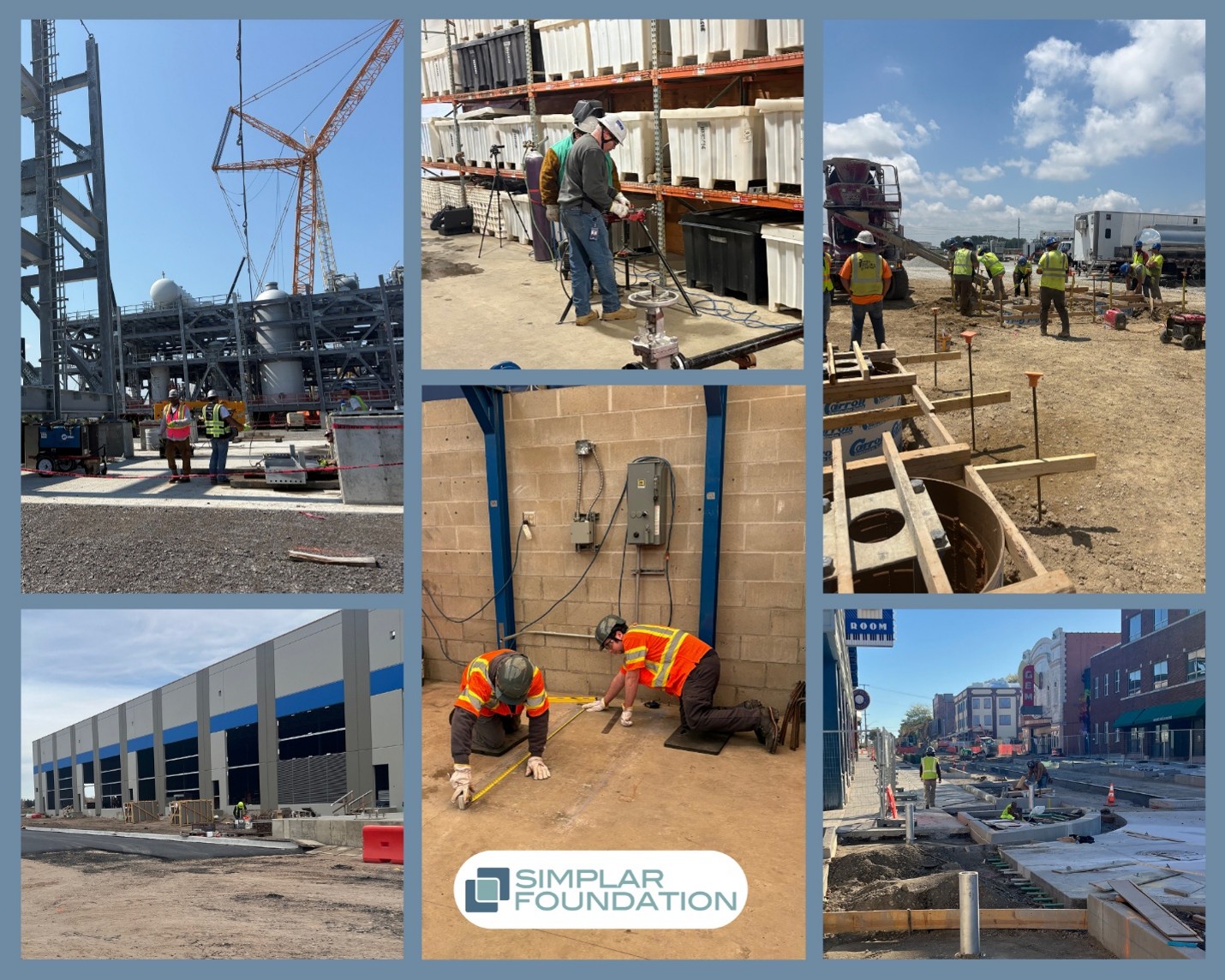
View pictures of multiskilled workers.

“These findings show that multiskilling is more than a workforce strategy. It can also be a project-delivery strategy,” said Tiffany Robinson, ABC vice president of workforce and safety policy. “Careers in Construction Month is an opportunity to underscore the value of building broader skills that bolster productivity on jobsites. Multiskilling can expand workers’ capabilities and career opportunities while giving the industry a practical strategy to address persistent labor shortages and increase America’s capacity to build.”

This study examines the time reduction and production gain of multiskilled workflows compared to traditional single-trade workflows for construction scopes and assemblies that require frequent trade-to-trade handoffs to be coordinated in sequence. The analysis was based on controlled field trials across 11 construction activities with 10 trade-to-trade handoffs at the Cianbro Institute in Pittsfield, Maine.

“This is compelling evidence that multiskilling can significantly enhance productivity, efficiency and competitiveness across the industry,” said Michael Bennett, senior executive vice president and chief administrative officer of The Cianbro Cos., Pittsfield, Maine. “Specifically, in this report we see that work productivity is accelerated when the work moves efficiently from one trade to the next. By combining rigorous research with real-world field applications, this study demonstrates how innovation in workforce development and investment in competency-based education can create a more agile workforce—one that delivers greater value to clients while expanding career opportunities for craft professionals. Cianbro is honored to contribute to this invaluable research.”

View videos of multiskilling in action and multiskilled workers speaking to the benefits.

Examples of handoffs affecting multiskilled work:

  • Phased school renovation: Work is often limited to nights, weekends, breaks or summer windows. Repeated handoffs among demolition, structural systems (formwork, reinforcing steel, concrete, masonry), mechanical, electrical, plumbing, finishes, inspections and turnover activities can affect reopening dates.
  • Transit station or airport terminal renovation: Work occurs around public access, security, operations, inspections and phased turnover. Trade-to-trade delays can disrupt passenger-facing areas and downstream activities.
  • Bridge or roadway closure work: Multiple trades and crews must complete work within limited closure windows. Handoff delays can affect lane reopening, public access and traffic.
  • Water or wastewater treatment plants: Equipment installation, rigging, setting, piping, electrical, controls, insulation, flushing, testing and startup often must be sequenced tightly to enable plant operations.

“Multiskilling increases productivity by reducing waiting, setup, reorientation, coordination and restart between crews,” said Brian Lines, Ph.D., P.E., principal investigator and associate professor, Civil, Environmental & Architectural Engineering, University of Kansas. “We saw firsthand that qualified multiskilled crews enable reduced-handoff workflows, which in turn reduces unnecessary crew changes, improves workflow continuity and makes production more predictable. For owners, contractors, policymakers and project teams, multiskilling is the ideal strategy where repeated handoffs are likely to create measurable delays.”

Highlights in this second of three releases of the data series include:

  • Multiskilled workers did not have to complete individual tasks faster to improve efficiency. By reducing handoffs between trades, projects were completed about 30% faster, while traditional single-trade workflows increased completion time by roughly 40%.
  • Fewer trade handoffs allowed crews to accomplish more work in the same production window. Workflows with fewer handoffs completed 37% to 50% more installed work in the same amount of time.
  • The multiskilled team increased scope coverage and capability. Two multiskilled workers completed a scope spanning seven trade functions without repeatedly handing off the work to separate crews. The one-trade workflow used 12 workers across the same sequence and transferred the work from one trade to another 10 times. Both crews held credentials for each trade performed.
  • Multiskilling was most effective when frequent handoffs were concentrated within closely sequenced work activities. The size of the benefit was up to 92% less elapsed time, depending on how frequent and disruptive the handoffs were. Across 12 scenarios and 120,000 simulation runs, reducing repeated handoffs shortened the time required for the defined work scope.

This new research series, which launched Sept. 2, was conducted by the Simplar Foundation and three university research partners: Arizona State University, the University of Kansas and the University of North Carolina at Charlotte. The third and final installment of research will be released later this year.

To explore the full dataset, visit simplarfoundation.org/multiskilling/. To learn more, visit abc.org/multiskilling.

The construction industry had 251,000 job openings on the last day of August, according to an Associated Builders and Contractors analysis of data from the U.S. Bureau of Labor Statistics’ Job Openings and Labor Turnover Survey. JOLTS defines a job opening as any unfilled position for which an employer is actively recruiting. Industry job openings decreased by 48,000 last month but are up by 38,000 from the same time last year.

“The August JOLTS data indicate that both the demand for and supply of construction workers are decreasing,” said ABC Chief Economist Anirban Basu. “Job openings fell to the lowest level since March, while just 99,000 construction workers were laid off for the month, the fewest in any month since the start of this data series in December 2000.

“These dynamics may seem contradictory but are consistent with ongoing weakness in the residential segment coupled with booming data center activity and the resulting scarcity of certain skilled trades workers,” said Basu. “Nonresidential contractors, which on net expect to increase their staffing levels over the next six months, according to ABC’s Construction Confidence Index, will likely experience faster labor cost escalation due to these shortages in certain occupational categories like electricians and HVAC workers.”

The construction industry added 11,000 jobs on net in September, according to an Associated Builders and Contractors analysis of U.S. Bureau of Labor Statistics data. On a year-over-year basis, industry employment has increased by 109,000 jobs, or 1.3%.

Nonresidential construction employment increased by 16,100 positions in September, with gains in all three subcategories. Nonresidential specialty trade added the most jobs, growing by 12,300 positions, while heavy and civil engineering and nonresidential building added 2,600 and 1,200 jobs, respectively.

The construction unemployment rate was 3.5% last month. Unemployment across all industries increased to 4.2% but is 0.2 percentage points lower than one year ago.

“The construction industry added jobs for the seventh straight month in September,” said ABC Chief Economist Anirban Basu. “Industry employment growth is increasingly concentrated on the nonresidential side as the data center boom continues to support rapid hiring of certain specialty trade contractors.

“At the same time, the residential segment continues to hemorrhage workers, and that side of the industry has now shed 1.0% of its employment base over the past year,” said Basu. “Contractor hiring expectations remain elevated, according to ABC’s Construction Confidence Index, an outlook that seems justified given the insatiable demand for new data centers.”

Construction input prices increased 1.2% in August compared to the previous month, according to an Associated Builders and Contractors analysis of the U.S. Bureau of Labor Statistics’ Producer Price Index data. Nonresidential construction input prices also increased 1.2% for the month.

Overall construction input prices are 8.9% higher than one year ago, while nonresidential construction input prices are 8.8% higher. Prices increased in 2 of the 3 energy subcategories last month. Crude petroleum prices expanded 5.2% and unprocessed energy materials prices rose 1.5%, while natural gas prices were down 11.6% in August.

“Construction input prices surged again in August, and the increases were widespread across materials,” said ABC Chief Economist Anirban Basu. “Prices for iron and steel, softwood lumber, switchgear, copper wire and cable, and several derivative metal products are now up more than 10% year over year. While contractors remain optimistic about their margins, according to ABC’s Construction Confidence Index, ongoing input price escalation is likely to weigh on profitability over the next several months. This is especially true given recent escalation in the trade war with Canada and the fact that oil prices have jumped back above $100 per barrel.”

Associated Builders and Contractors reported today that its Construction Backlog Indicator rebounded to 8.5 months in August, according to an ABC member survey conducted Aug. 20 to Sept. 4. The reading is up 0.5 months from July and unchanged on a year-ago basis. 

View the full Construction Backlog Indicator and Construction Confidence Index data series.

Only the largest contractors experienced a decline in backlog in August. On a year-over-year basis, backlog gains are concentrated among the smallest contractors (those with less than $30 million in annual revenues).

ABC’s Construction Confidence Index readings for sales and profit margins increased in August, while the reading for staffing levels fell. The readings for all three components remain above the threshold of 50, indicating expectations for growth over the next six months.

“Backlog rebounded from July’s cyclical low but remains below the prevailing level from the last several months,” said ABC Chief Economist Anirban Basu. “Data centers continue to keep contractors busy even as activity softens in other segments. Although the backlog gap between contractors with and without data center work narrowed in August (9.9 vs. 8.3 months, respectively), that appears to reflect more contractors securing work in the data center segment rather than a broader structural trend. Roughly 1 in 6 ABC members is currently under contract to work on a data center, the highest proportion on record.  

“The share of contractors that intend to cut their staffing levels over the next six months rose to 12.3% in August, the most in any month since December,” said Basu. “At the same time, there was a sharp increase in the number of contractors who, unprompted, mentioned labor shortages in the survey. With construction job openings at a near two-year high, it appears that labor scarcity is reemerging as a major headwind for the industry.”

The construction industry added 22,000 jobs on net in August, according to an Associated Builders and Contractors analysis of U.S. Bureau of Labor Statistics data. On a year-over-year basis, industry employment has expanded by 120,000 jobs, an increase of 1.5%.

Nonresidential construction employment grew by 10,400 positions in August, with gains in 2 of the 3 subcategories. Nonresidential specialty trade added the most jobs, increasing by 7,800 positions, followed by heavy and civil engineering, which added 4,400 jobs. Nonresidential building lost 1,800 jobs in August.

The construction unemployment rate fell to 3.1% in August, down 0.1 percentage points from August 2025. Unemployment across all industries remained unchanged at 4.1% and is 0.2 percentage points lower than one year ago.

“The construction industry added jobs for the sixth straight month in August and, on a year-over-year basis, is growing its employment base at the fastest pace since February 2025,” said ABC Chief Economist Anirban Basu. “That growth has occurred despite a shrinking homebuilding segment.

“Hiring remains highly concentrated in the nonresidential specialty trade contractor category, a byproduct of the rapid and ongoing increase in data center-related construction activity,” said Basu. “Given the lengthy backlog levels of contractors with data center work, as reflected in ABC’s Construction Backlog Indicator, the artificial intelligence buildout will continue to support construction employment growth during the next several months.”

National nonresidential construction spending increased 0.1% in July, according to an Associated Builders and Contractors analysis of U.S. Census Bureau data. On a seasonally adjusted annualized basis, nonresidential spending totaled $1.286 trillion.

Spending was down on a monthly basis in 8 of the 16 nonresidential subcategories. Private nonresidential construction spending was up 0.4%, while public nonresidential spending was down 0.2% in July.

“The increase in nonresidential construction spending that occurred in July was entirely due to data centers,” said ABC Chief Economist Anirban Basu. “Excluding that booming category, nonresidential spending fell for the second straight month and is down to the lowest level since September 2023.

“Nonresidential activity is even more concentrated given that the power category, which has been boosted by the electricity needs of data centers, has also grown substantially over the past year,” said Basu. “While contractors remain upbeat about their sales over the next six months, according to ABC’s Construction Confidence Index, that upbeat outlook is increasingly dependent on a single sector.”

The construction industry had 326,000 job openings on the last day of July, according to an Associated Builders and Contractors analysis of data from the U.S. Bureau of Labor Statistics’ Job Openings and Labor Turnover Survey. JOLTS defines a job opening as any unfilled position for which an employer is actively recruiting. Industry job openings increased by 28,000 last month and are up by 21,000 from the same time last year.

“The construction job opening rate rose to the highest level in nearly two years in July,” said ABC Chief Economist Anirban Basu. “Contractor hiring also accelerated for the month, while layoff activity slowed. This meaningful improvement in labor demand is a function of insatiable demand for data centers and the accompanying strength in power-related construction.

“With contractors broadly optimistic about expanding their staffing levels over the next six months, according to ABC’s Construction Confidence Index, it’s possible that reemerging worker shortages will put upward pressure on labor costs over the next several months.”

Overall construction and nonresidential input prices both increased 0.1% in July compared to the previous month, according to an Associated Builders and Contractors analysis of U.S. Bureau of Labor Statistics’ Producer Price data.

Construction input prices are 7.4% higher than one year ago, while nonresidential construction input prices are 7.2% higher. Prices decreased in 2 of the 3 energy subcategories last month. Crude petroleum prices decreased 11.9%, and unprocessed energy materials decreased 7.4%. Natural gas prices were up 10.4% in July.

“Construction input prices were virtually unchanged in July, but that relatively tame behavior can be traced to the dip in fuel prices that occurred at the start of the month,” said ABC Chief Economist Anirban Basu. “Diesel fuel prices, for instance, surged more than $0.50 per gallon from the week prices were measured for the index through the end of July. Given the subsequent rebound in oil prices and ongoing increases in certain materials prices, such as lumber and iron and steel, materials prices will almost certainly continue to climb in the months to come.

“Materials prices remained up more than 7% on a year-over-year basis in July,” said Basu. “Despite this significant annual increase and the prospect of ongoing inflation, contractors on net expect their profit margins to expand over the next six months, according to ABC’s Construction Confidence Index.”